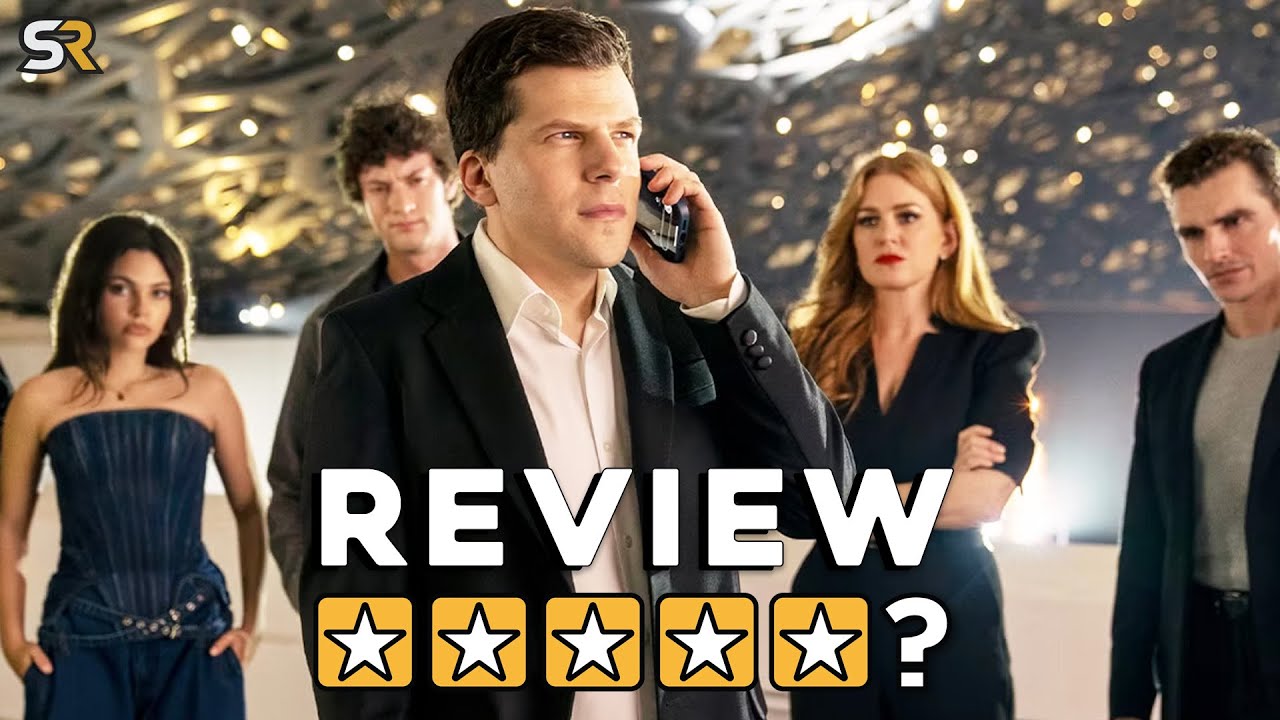
The Horsemen are back with their antics in this new film. Depending on your tolerance for cheesy content and condescension, "Now You Don't" is either a welcome return to extreme fun or a test of endurance for how much disbelief you can suspend. It's reminiscent of "Avengers: Endgame" but tailored for fans of magical heists, with Rube Goldberg-like sequences elevated to new levels of absurdity.
The original film's notorious ending twist has been surpassed by the illogical feats in "Now You Don't," making its predecessors seem like grounded dramas. Directed by Ruben Fleer, known for "Venom," this installment at least shows more self-awareness. Rosamund Pike shines as the billionaire villain Veronica Vanderberg, who even criticizes the old-style magic of the Horsemen.
This film resembles Adam West's Batman more than Christopher Nolan's, pushing the boundaries of disbelief. It's been a decade since J. Daniel Atlas and the original crew were seen together. They reappear with a surprise reunion show in Bushwick, performing a crypto-theft from the audience, only to reveal it was an illusion by upcoming magicians Charlie, Bosow, and June. But the real Atlas recruits them under the Eye's orders, a secretive magic organization.
Merritt, Jack, and Henley are soon reunited, expanding the team to seven or eight, if you count Morgan Freeman's Thaddius—much like the "Fast and Furious" series. The mission? To expose Vanderberg as a descendant of Nazis. Pike adds flair to the otherwise lazily assembled film, with Harrelson providing amusement, while others seem to wade through a slick, commercial atmosphere.
Despite big studio backing, the film uses progressive language to mask its real aim: entertainment disguised as anti-capitalism critique. Vanderberg accuses the Horsemen of being entertainers rather than true anti-capitalists—a critique that may extend to its filmmakers.
Class warfare here is idealized as something waged by a few skilled individuals, simplifying societal change to just embarrassing the powerful. "Now You Don't" packs its 2-hour runtime with more deceit-filled scenarios than actual plot, driven by Brian Tyler's heavy-handed score. The film projects an optimistic facade rooted in its era but lacks genuine magic.
"Now You Don't" ultimately misinterprets its magical premise, offering tricks that mask a lack of substance. It's perhaps one of the most condescending sequels, assuming the audience needs little thought. A cheeky phone number reference in the movie (20110) may well suggest "2010 wants its film back."