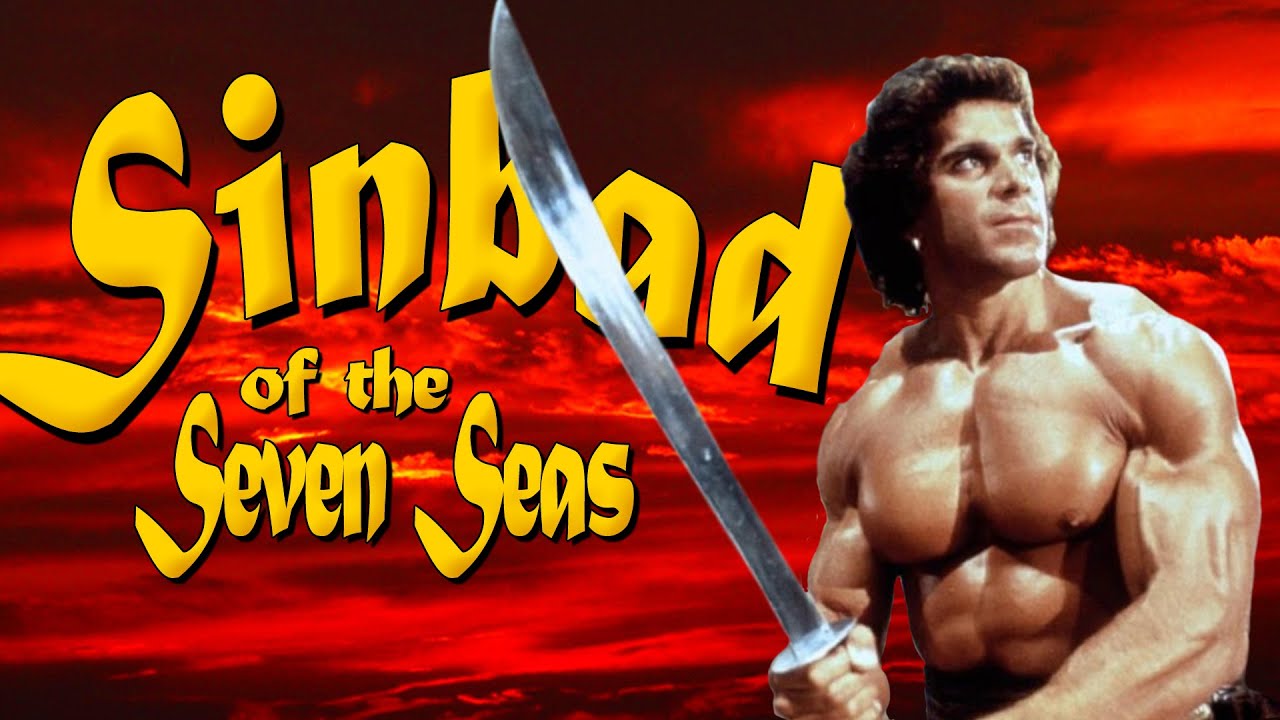
This week on Dark Corners, we took a closer look at Canon Films' take on Arabian myth with 'Sinbad and the Seven Seas.' This film, while reminiscent of their approach to Greek mythology in 'Hercules,' attempts to weave its narrative around an Arabian story, albeit with some discrepancies from traditional tales. Notably, it has no resemblance to Edgar Allan Poe's 'The Thousand-and-Second Tale of Scheherazade.'
The story unfolds with Sinbad and his diverse crew set to meet the Sultan in Basra. However, the plot quickly introduces a villain, Jafar, with grand aspirations to master the city and the princess's mind. These characters embark on a quest for magical gems, encountering various mythical locations and creatures, but the narrative often strays due to inconsistent editing and pacing.
As the film progresses, Jafar's inconsistent powers and the dialogue's uneven overlay with narration become evident. Original director Luigi Cozzi was replaced by Enzo G. Castellari, who then produced extensive footage. Cozzi later returned to edit it down to 90 minutes, resulting in a fragmented storyline that leaves viewers questioning character motivations and plot coherence.
Jafar aided by a wicked sorceress named Sucra, adds to the plot complexity, while Sinbad's encounters with mind vampires and other perils remain expedited and under-explored. Despite the haphazard narrative, the film manages brief moments of humor and creativity, particularly in design and performance, especially from John Steiner's lively portrayal of Jafar.
Ultimately, 'Sinbad and the Seven Seas' reflects Canon Films' distinctive style, not necessarily as a refined cinematic experience but as an adventurous spectacle. The editing challenges are apparent, and the story feels more like a collection of set pieces than a cohesive adventure.