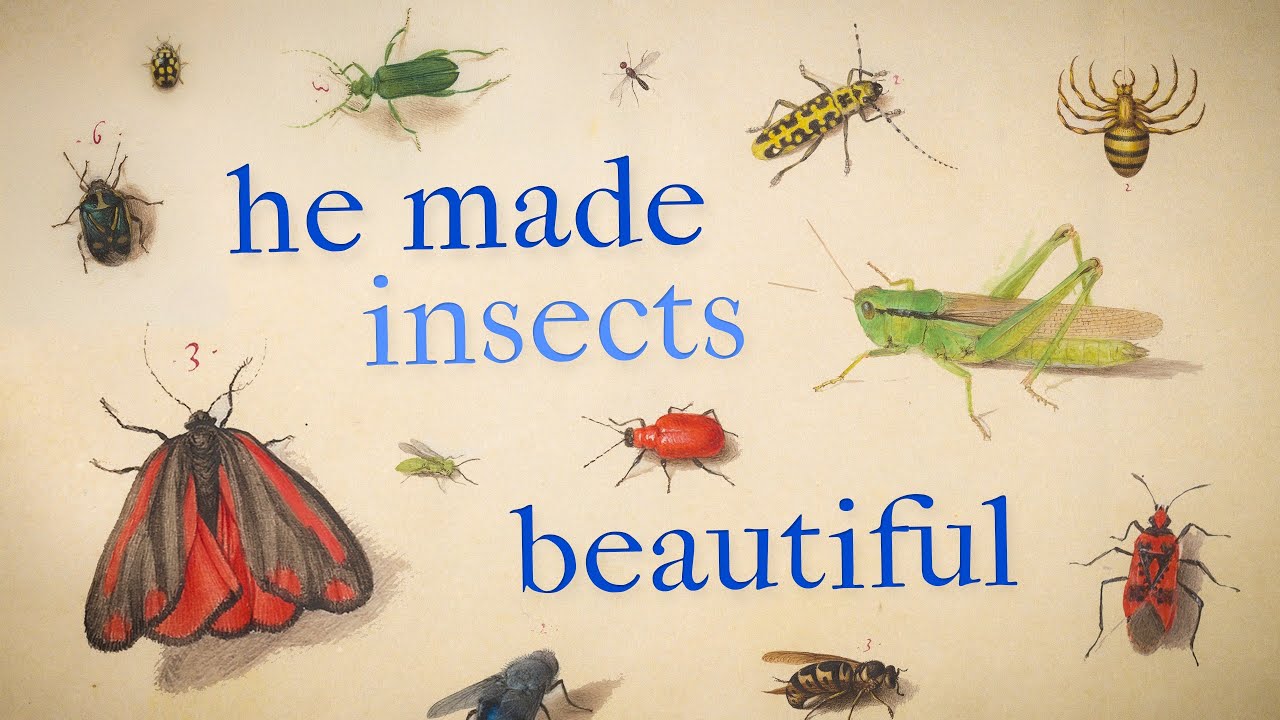
Humanity took a long time to gain scientific or aesthetic interest in insects due to evolutionary, psychological, and cultural reasons. It wasn't until the late 1500s that people, including artists, began to take interest.
During the mid-1500s, Antwerp was a hub of global trade and cultural flourishing. Joris Hoefnagel, born in Antwerp to a wealthy family, was a true Renaissance man, interested in arts, trade, and natural history.
Hoefnagel traveled to sketch exotic plants and animals, which inspired his work that mixed art and natural science. One of his significant contributions was a series called "The Four Elements," featuring around 300 watercolor miniatures of animals categorized by the classical elements: water, earth, air, and fire.
Interestingly, Hoefnagel placed insects in the fire category, a decision whose symbolism could be rooted in transformation. His depictions, like his update on Durer’s stag beetle, demonstrated an advanced attention to detail and color, emphasizing nature’s intricacies.
This project was a precursor to entomology, preceding the advent of the microscope. Hoefnagel’s work reflects a blend of art and science, celebrating even those creatures often deemed undesirable.
Though initially seen by few, Hoefnagel, with his son, created "Archetypa," a series of prints that spread through Europe, leaving a legacy that contributed significantly to natural history and the art world.