As highly acclaimed as it was unrelenting, Uncut Gyms felt like the apex of creativity wielded by sibling directors Benny and Josh Safdie. Their respective returns to solo film work, however, suggest that working together may have diluted their individual talents.
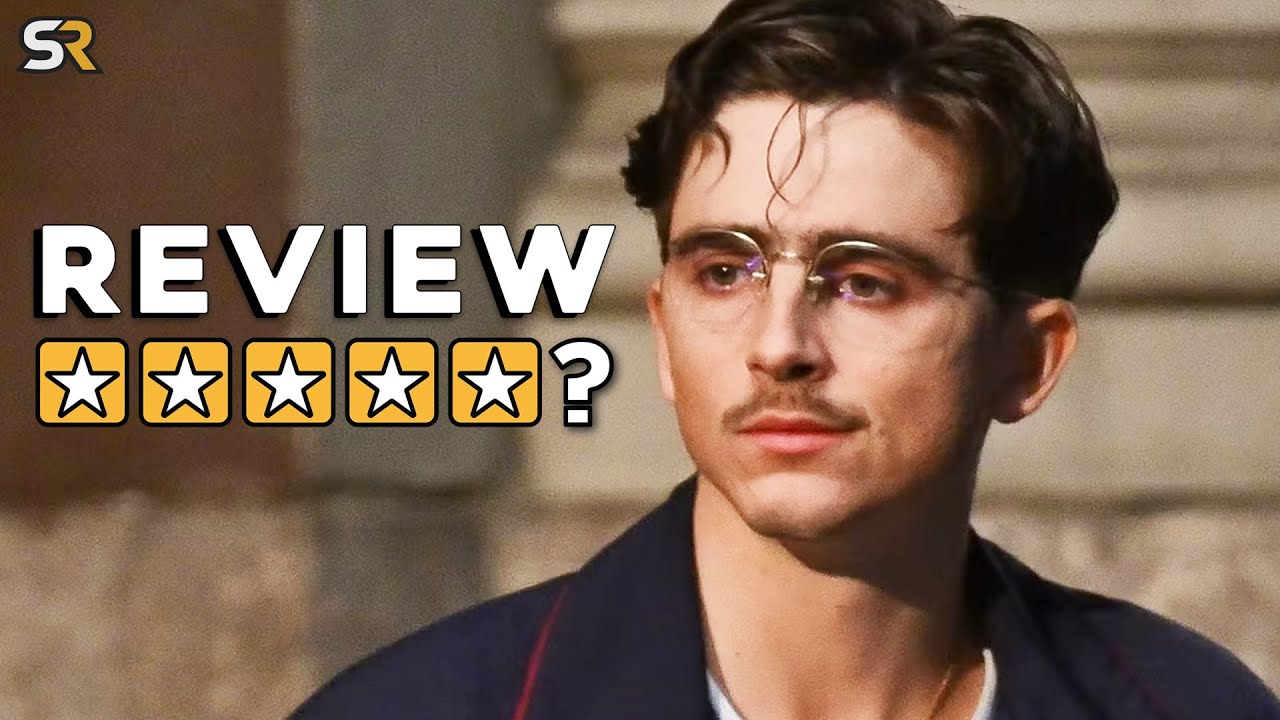
Josh's Marty Supreme is the most intense film released yet by someone with the last name Safdie. Despite that high bar, it's also possibly the best. Timothy Chalamé delivers one of his greatest performances yet by leveraging his scrappy boyish charms to make audiences love a character who is frequently anything but lovable.
A script by Safdie and Ronald Bronstein transforms the real-life story of table tennis player Marty Reisman into a 1980s sports movie by way of the Greek fable of Icarus. While the director ratchets the journey to a level of tension that eclipses his work as part of a filmmaking duo.
Chalamé plays Marty Mouser, a fast-talking, egotistical table tennis star. Narrowly escaping a prescribed fate as a shoe salesman, and only by robbing his employer for the wages he earned, Marty jets off to London for an international competition. Underwhelmed by the meager accommodations offered by organizers, he procures a room at a four-star hotel, catching the eye of Gwyneth Paltrow's K. Stone, a movie star bored enough to embark on a passionate affair.
Despite his bravado, Marty loses the final round to Cottoindo, a Japanese player with an unconventional stroke. Returning home in disgrace, Marty starts hustling with his pal Wall-E to mount a comeback. Even as he discovers his childhood friend Rachel is pregnant and insisting he's the father. As authorities bear down on him for his burglary, he turns to an unlikely source for funds. Kevin O'Leary's Milton Rockwell, Kay's business magnate husband.
Like Uncut Gyms, there's a chaotic energy that risks audience exhaustion, but feels absolutely exhilarating. The swings here are huge. In the opening credits, a shot dissolves from a mother-to-be's fertilized egg into a ping pong ball bearing the title. It's easy to see the influence of The Color of Money in the way the filmmaker spirals around the table while composer Daniel Leaden creates a score which vividly evokes the Synclavier era of Karate Kid.
Yet Safdie sets the film deep in a blue-collar Jewish 1950s New York, reminding viewers of the close quarters and community of Once Upon a Time in America. His mother and uncle dismiss his proven skills as Mishagos, which only seems to motivate him further. There is something attractive about Marty's unwavering belief in himself, but Chalamé embraces his immaturity and selfishness with equal vigor. You understand why those around him often seem as dazzled as they are exasperated.
Paltrow's semi-retired status gives an authentic sheen to K. Stone's declining wattage, while Odessa A'zion makes Rachel a worthy counterpart to the would-be legend's self-fulfillment. The film's older cast members from Fran Drescher and Sandra Bernhard to Abel Ferrara deliver powerful turns, but Shark Tank investor O'Leary holds his own against Chalamé. His ruthlessness forms the perfect opposite to Marty. Every scene between them feels like you've been put inside a cage with two tigers.
Josh Safdie never lets off the gas. But that full-throttle approach is so dense, encompassing both grand sports movie payoffs and an extraordinary arc that it overdelivers. Marty Supreme isn't just a masterpiece, but feels vividly like a cohesive and singular vision.