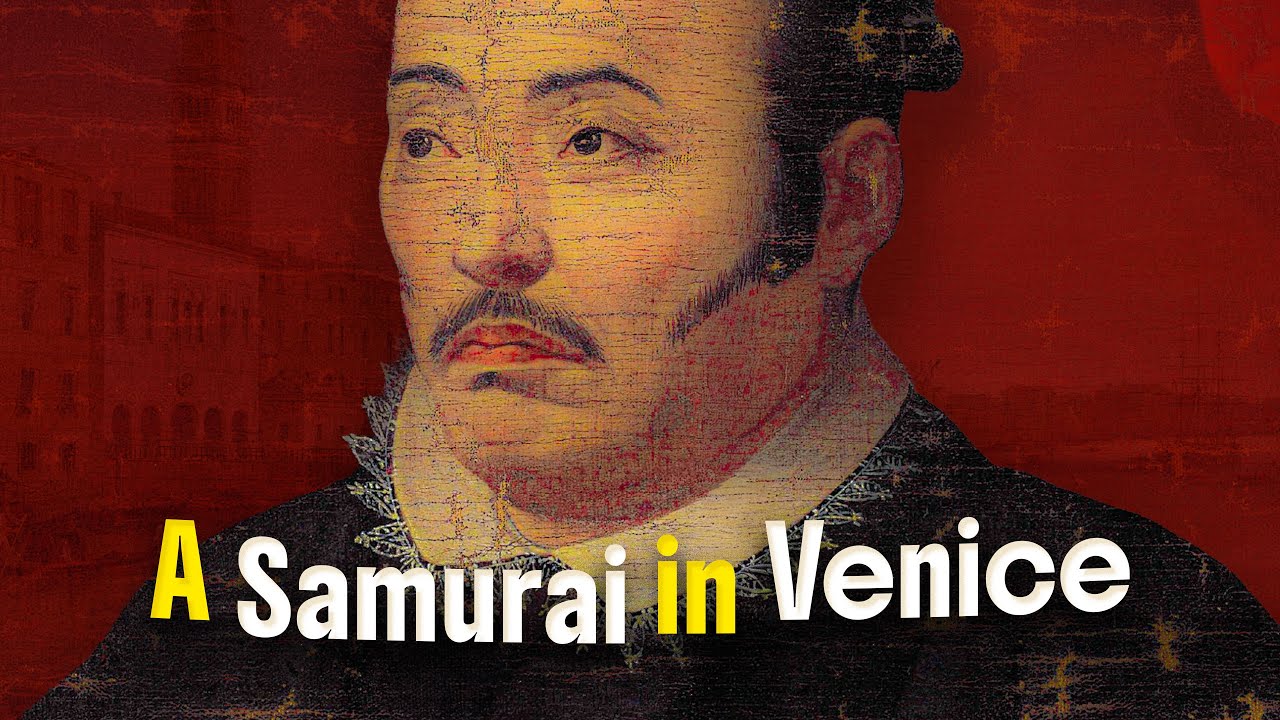
For 250 years, a Japanese secret was hidden deep in the state archives of Venice, Italy. Not a single person in Japan was aware of it. This secret was contained in two letters found in 1873 during the Iwakura Embassy, a Japanese diplomatic mission traveling through the US and Europe to study Western political and economic systems. Japan had only recently emerged from self-imposed isolation and wanted to modernize by learning from the West.
These letters, dated back to 1615 and 1616, were found by Kou Kunake, who noted them to be from an emissary of Otomo Sorin, a Japanese feudal lord. However, the dates did not align with the known Teno Embassy—the first Japanese mission to Europe. Instead, they revealed a different mission led by Date Masamune from Sendai and his vassal, the samurai Hasekura Tsunenaga.
The letters during the Edeto period came at a time when Christianity was spreading in Japan, introduced by Francis Xavier in 1549. The period saw fluctuating acceptance of Christianity, ultimately leading to its suppression. Despite this, Franciscan friar Luis Sotelo managed to gain favor with Date Masamune, resulting in a fruitful diplomatic mission.
This mission was part of a broader context of Japanese history marked by battles and unifications under leaders like Oda Nobunaga and Tokugawa Ieyasu, interspersed with cultural exchanges and fluctuations in foreign policy. While the details were lost over time, the rediscovery of these letters paints a fascinating picture of early international diplomacy and cultural exchange.