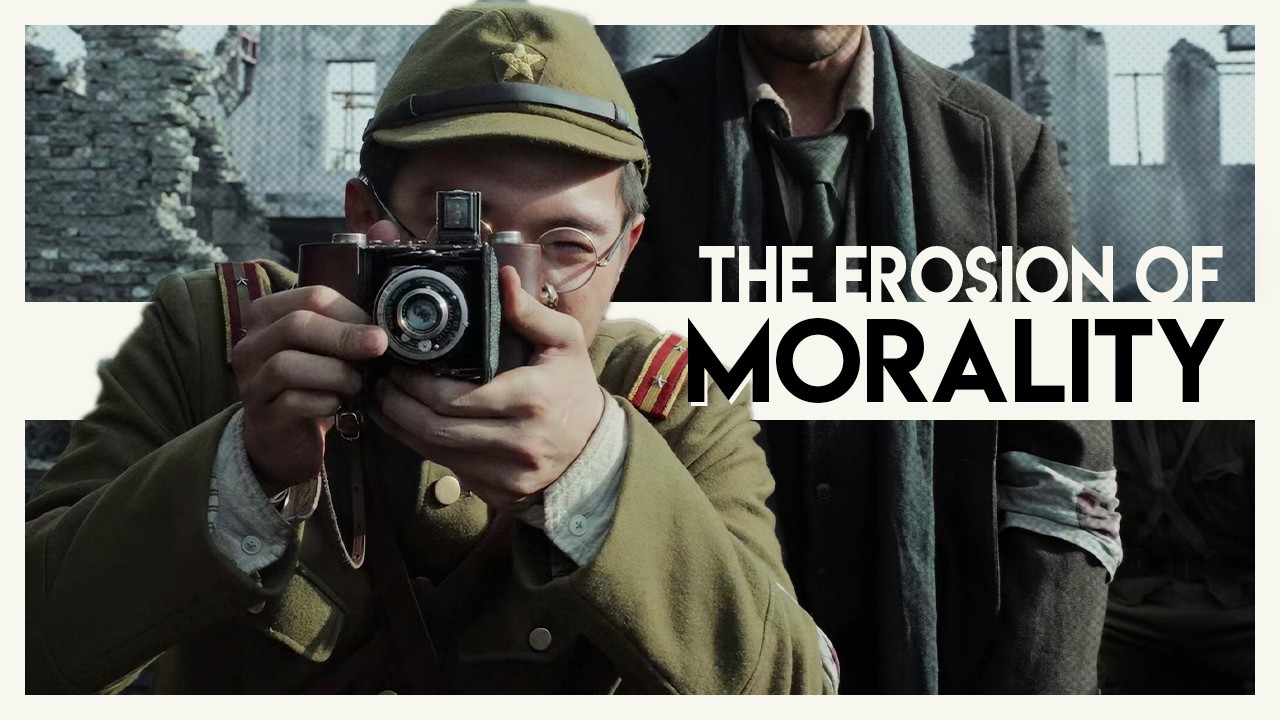
The film "Dead to Rights," also known as "Nanjing Photo Studio," is a 2025 war drama that offers a gripping portrayal of the Nanjing Massacre—a six-week series of brutalities committed by the Imperial Japanese Army in 1937. The movie stands out for its depiction of ordinary civilians rather than traditional heroic figures. It received acclaim for being the third-highest-grossing Chinese film of 2025.
This piece aims to dissect the film through an unexpected perspective: that of a Japanese photographer, Ito Hideo. As the story unfolds, Ito transforms from a naive, young photographer to someone who is capable of monstrosities, illustrating how ordinary individuals can become complicit in evil when influenced by certain systems.
"Dead to Rights" introduces the character of Ito in the chaos following the fall of Nanjing. Initially resistant to the horrors of war imposed upon him, Ito faces a series of choices that deteriorate his conscience. The film mesmerizingly captures this inner conflict, leading viewers to question where their own moral boundaries might lie in similar circumstances.
The filmmakers bring to light how incremental rewards and punishments can erode one's ethics, as seen when Ito receives recognition and fame for his work photographing the Japanese military instead of outright defiance. Slowly, his acclimatization to the atrocities surrounding him takes root, overshadowing his initial hesitations and drawing him deeper into complicity.
The narrative crescendo showcases Ito’s transformation against the backdrop of a real-life historical tragedy, urging audiences to examine evil's banality and its consequences. This exploration is supported by the film’s dramatic sequences, emphasizing the banality through Ito’s everyday actions escalating into participation in atrocities.
The film itself sparked discussions about its impact on cultural relations and historical acknowledgments. While some criticized its potential to incite anti-Japanese sentiment, it is essential to comprehend the context of denialism surrounding the Nanjing Massacre and similar historical events.
As "Dead to Rights" vividly illustrates, acknowledging our history—even its darkest chapters—remains crucial. The film encourages not only an awareness of past atrocities but also a critical reflection on how easily the seeds of evil can grow within ordinary people when faced with systematic pressures.
Overall, "Dead to Rights" serves as a poignant reminder and a call to reevaluate our historical perceptions and ethical standpoints through the lens of cinematic storytelling.