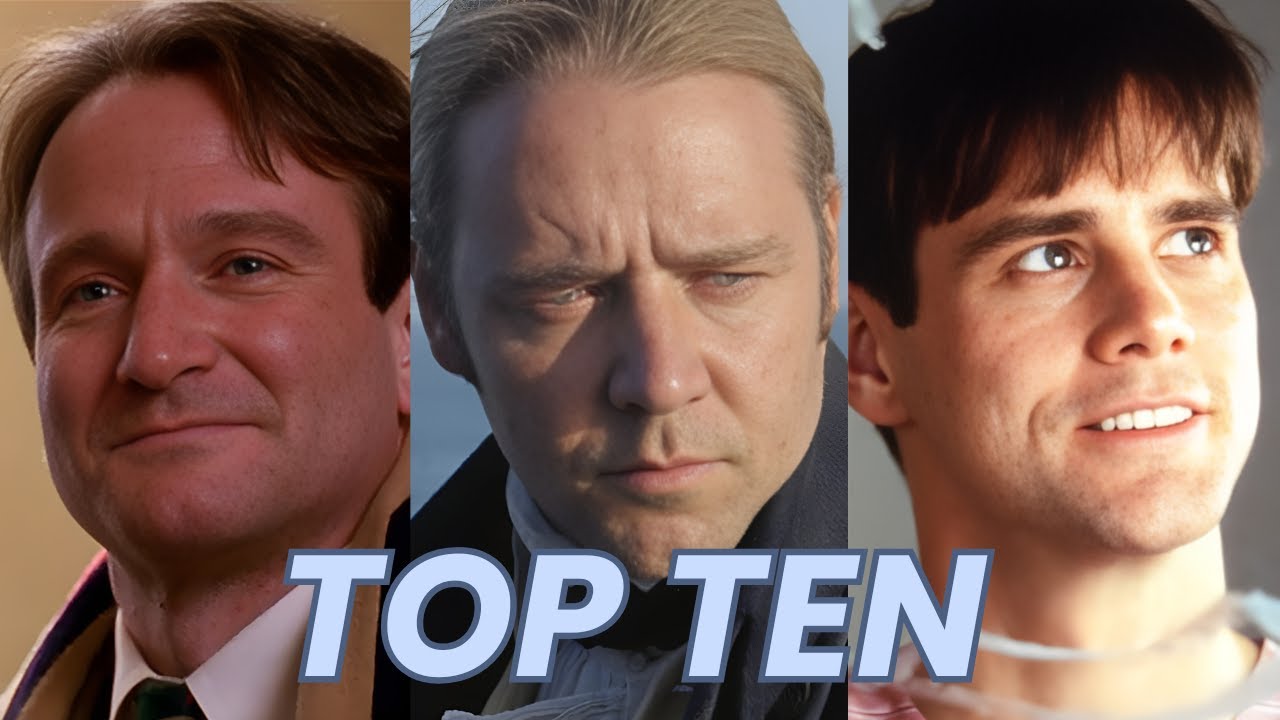
Hi. My name is Matthew Pejkovic from Matt's Movie Reviews and these are my Top Ten Peter Weir Movies.
10) THE MOSQUITO COAST (1986)
Harrison Ford delivers one of his best performances in The Mosquito Coast as Allie Fox, a brilliant yet stubborn inventor who rejects modern society and uproots his family into the jungles of Central America where Allie’s dream of establishing utopia brings with it danger and paranoia. With a screenplay by Paul Schrader, The Mosquito Coast is a suitably dark and confrontational affair, Weir presenting his own take of a 'heart of darkness' style tale in which ego and paranoia transforms a brilliant yet complex man into a tyrant.
9) GREEN CARD (1990)
Andie McDowell stars in Green Card as Bronte, a horticulturist who has found the dream apartment. The only catch is that the cantankerous apartment manager will only lease to married couples. Enter Frenchman Georges (played by Gerard Depardieu), a budding composer whose visa is about to expire. Quickly a marriage of convenience is arranged, only for the pair to fall in love. The romantic comedy was not the forte of Weir, yet Green Card proved that the Australian filmmaker could also tickle funny bones and breaks hearts. It also helps that Depardieu and the breathtaking McDowell both deliver astounding performances and strong chemistry.
8) THE YEAR OF LIVING DANGEROUSLY (1982)
Set in 1965 Indonesia during the overthrow of the tyrannical President Sukarno, The Year of Living Dangerously stars Mel Gibson as an Australian journalist who constantly straddles ethical boundaries in his pursuit for the truth. Sigourney Weaver co-stars as a military attaché who gets involved with Gibson’s journalist, while Linda Hunt won an Oscar for her performance as male photojournalist Billy Kwan. Filmed in the Philippines after the Indonesian government denied permission, Weir nevertheless brings a palpable sense of place to this humidity drenched tale of revolution and investigative journalism, with many tense scenes of political violence balanced with a scorching love story between its two leads.
7) THE WAY BACK (2010)
Loosely based on the memoir “The Long Walk”, the WWII set The Way Back chronicles the daring escape of several POWs (played by the likes of Jim Sturgess, Ed Harris and Colin Farrell) from a Siberian gulag as they make their way across a harsh environment while trying to evade capture. An epic tale of faith and survival, The Way Back marked Weir’s return to cinema nine years after Master and Commander, and as of writing, is the last feature film in his filmography. Weir’s deft skill at depicting the natural world in all of its brutal majesty and inherent danger is especially felt throughout The Way Back and is a fine film to end a remarkable career.
6) WITNESS (1985)
Witness stars Harrison Ford in one of his best performances as John Book, a Philadelphia police detective who is tasked to protect widowed Amish woman Rachel (played by Kelly McGillis) and her son Samuel (played by Lukas Haas) after they witness a brutal murder involving corrupt police officers. Mostly set in Pennsylvania Amish country, Witness provides an intriguing and fascinating portrayal of an elusive and resourceful people who thrive on the principles of their faith and the strength of their community. Ford delivers a captivating, character driven lead performance as the “English Man” who softens his hard shell, especially to Kelly McGillis’ lovelorn widow who is also excellent.
5) GALLIPOLI (1981)
Set in 1915 Western Australia, Gallipoli stars Mel Gibson and Mark Lee as rival athletes who form a strong bond whilst travelling to Perth to join the Australian Army in the battle against Turkish forces in Gallipoli. The quintessential Australian war film, Gallipoli has stood the test of time as an anti-war movie in which the themes of mateship, bravery, and the horror of war haunt viewers long after the film's tragic conclusion. Weir and acclaimed Australian writer David Williamson do a great job creating depth-filled characters, which Lee and especially Gibson bring to life with convincing skill.
4) MASTER & COMMANDER: THE FAR SIDE OF THE WORLD (2003)
The first and (so far) only film adaptation of the acclaimed Patrick O’Brien penned Master & Commander novel series, the 1800s Napoleonic Wars set Master and Commander: The Far Side of the World stars Russell Crowe as “Lucky” Jack Aubrey, the captain of the HMS Surprise who is ordered by his superiors in the British Navy to intercept the French Privateer Acheron before it reaches the Pacific. A rip-roaring adventure on the high seas about the men who command and serve on a duelling man-of-war, Master & Commander: The Far Side of the World features Weir’s first foray as an action filmmaker, with a brilliant opening sequence showcasing the director's ability to deliver the sound and fury of an action spectacle without sacrificing the films character dynamics.
3) DEAD POETS SOCIETY (1989)
Set in 1959, Dead Poets Society tells the story of how a group of junior students at the prestigious Welton Academy learned to embrace their individuality thanks to English professor Mr. Keating (played by Robin Williams) whose unorthodox teaching methods allow the boys to embrace the idea of freedom beyond the restrictive walls of the institution they call home. Weir’s movies often tackle themes of systematic conformity and the plight of the free thinker, and it would be Dead Poets Society that utilises these themes in an inspirational and heartbreaking drama. Meanwhile, Robin Williams delivers one of his best performances as a charismatic teacher whose urges his students to “seize the day!”
2) THE TRUMAN SHOW (1998)
A brilliant Jim Carrey stars in The Truman Show as Truman Burbank, a 30-year-old insurance salesman who is oblivious to the fact that his whole life has been on show for the adoring masses glued to their TV screens 24/7. Yet despite the perfection that surrounds him, Truman wants out. Masterfully crafted by Weir - who returned to filmmaking after a five-year absence - The Truman Show is a sharp, funny, and poignant comedic drama that delivers an engrossing take on celebrity culture and the voyeuristic tendencies of an unsatiable public that has proven to be prophetic in its ideas.
1) PICNIC AT HANGING ROCK (1975)
Adapted from the classic Australian novel by Joan Lindsay, Picnic at Hanging Rock is a disturbing mystery about the (fictional) disappearance of three students and one teacher from a prestigious all-girl college, who vanished into thin air while on a field trip at Hanging Rock, Victoria, on Valentine’s Day, 1900. An engrossing and haunting experience that successfully melds superbly crafted period drama with an unsettling outback mystery, Picnic at Hanging Rock was the film that introduced Peter Weir to the world stage and ushered in the Australian New Wave of Cinema. The tranquil and mysterious scenery of Picnic at Hanging Rock brings forth an ambience that is quite startling, and Weir’s strong ability in establishing mood creates a sense of dread that is palpable. An extremely creepy mystery thriller, Picnic at Hanging Rock remains a moody, enigmatic masterpiece of Australian cinema.