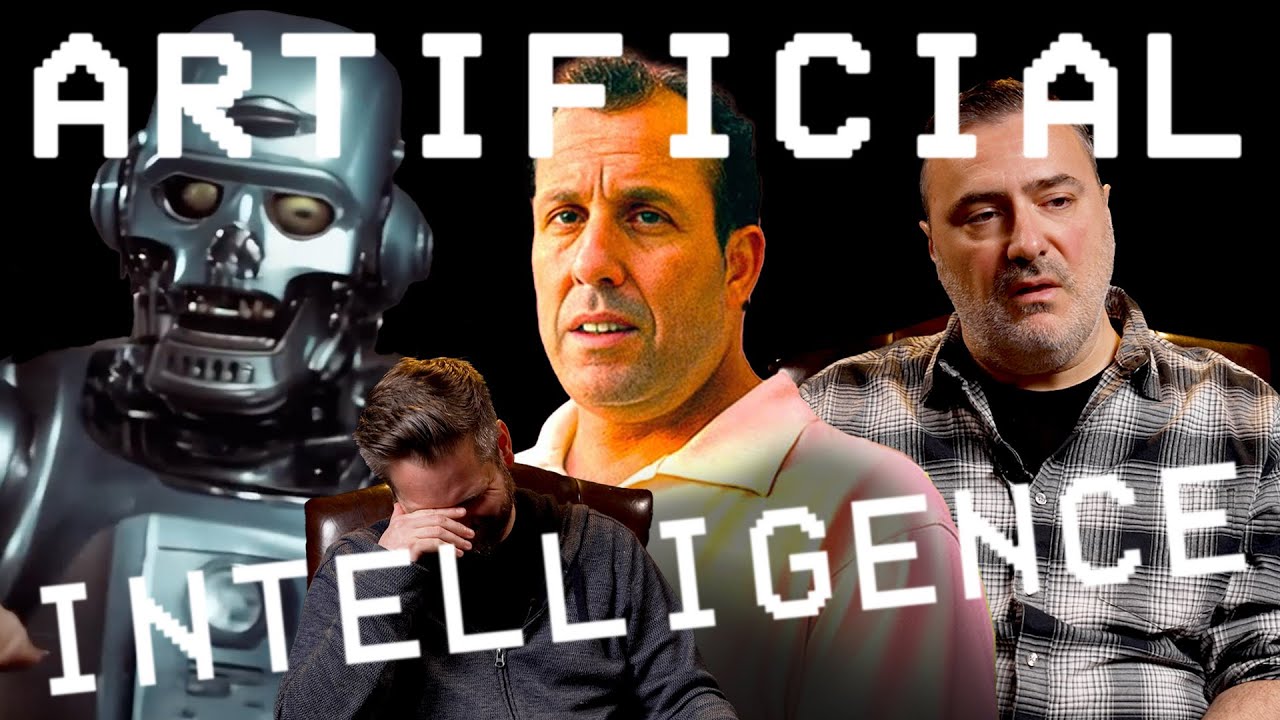
The discussion starts with a humorous setup about Weird Al, paralleling the seriousness of AI's impact on various fields, especially the arts. The speakers acknowledge their lack of full understanding, focusing on the arts and entertainment sector.
They discuss the mixed reactions to AI, noting that some view it as slop or as a threat to creativity, while acknowledging its utility in other sectors. However, they highlight the real struggle for artists graduating into a landscape dominated by AI, noting that AI cannot yet replace manual labor.
The conversation shifts to the prevalence of AI-generated content on platforms like YouTube, with particular attention given to AI-created movie trailers for films like 'Back to the Future 4,' 'Titanic 2,' and others, which often use faces of popular actors and can trick viewers. The speakers debate the ethics and legalities of this practice, expressing concerns about the erosion of creativity in favor of cheap, quick content creation.
There's a reflection on how AI may one day replace actors altogether, questioning the future of personal investment in film production. Even the process of stock footage could become obsolete. They express concern about AI’s ability to create realistic scenes that were once the domain of experienced artists.
The ethical implications of AI's data scraping from various sources, including personal files uploaded to the cloud, are discussed, touching on privacy concerns.
Ultimately, they ponder a future where creativity and original thought become secondary, replaced by AI-generated content. The article ends on a thought-provoking note about the potential for AI to create digital personas of real people, questioning the distinction between art created by humans and AI.