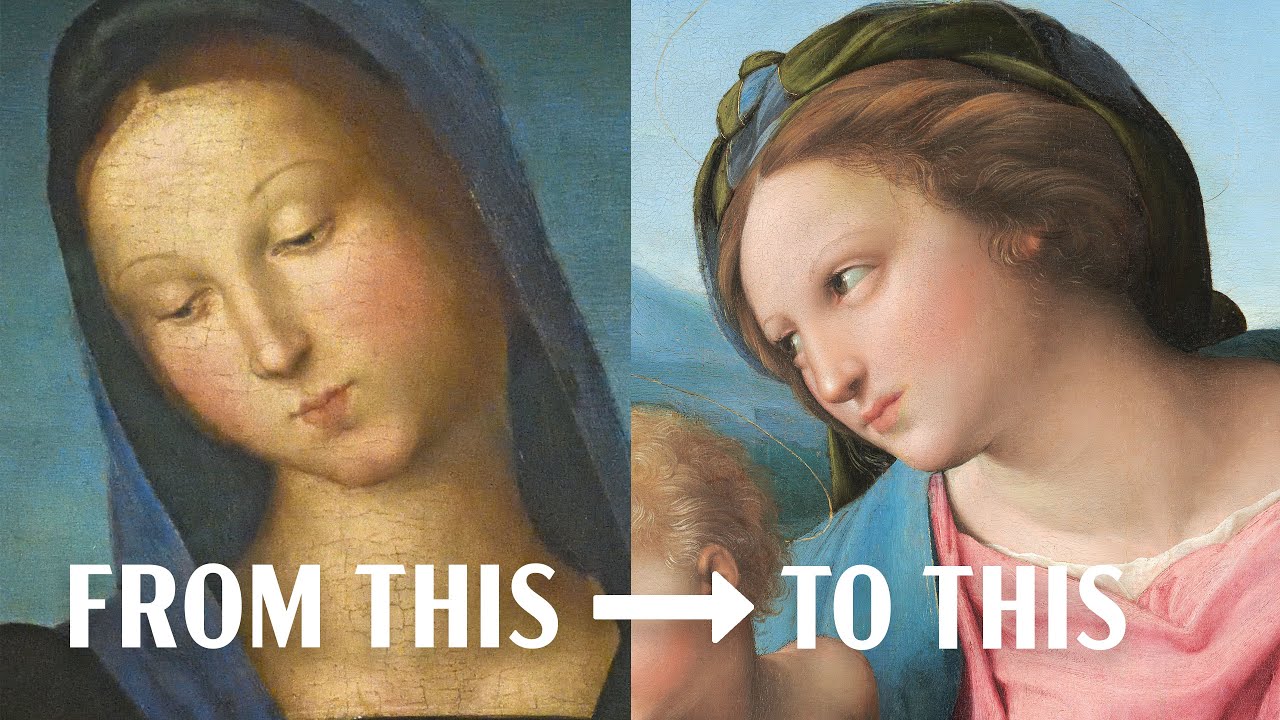
In the world of art history, few scenarios provide such a clear insight into an artist's creative journey as examining how they depicted a single subject over time. Such is the case with the renowned Renaissance painter Raphael, who painted the Madonna and Child at numerous points in his short but prolific career.
Raphael is celebrated as one of the great triad of Renaissance masters, alongside Leonardo da Vinci and Michelangelo. His most famous work is undoubtedly the 'School of Athens' fresco within the Vatican's papal palace. However, unlike da Vinci, who often left projects unfinished, Raphael was a prolific artist, completing many of his works within his 37 years. Known for his affable personality, Raphael was also a master of absorbing influences from other artists and creating works that maintained his unique style.
Raphael's early artistic influence came from his father, Giovani Santi, who was a respected court painter. Giovani's style was informed by the geometry-focused works of Pierro della Francesca and the clarity seen in early Netherlandish paintings. When Giovani died, Raphael was still a child but quickly surpassed his father's skills, as seen in his early Madonna paintings. These works show a sophisticated understanding of three-dimensionality lacking in earlier art.
During Raphael's early years, his Madonnas retained a static quality typical of the devotional paintings from the Middle Ages. This began to change when Raphael moved to Florence in 1504, where he was exposed to the works of Leonardo da Vinci and Michelangelo, which emphasized narrative, psychological depth, and anatomical precision.
One notable work from this period is the 'Madonna of the Meadow', where Raphael adopted the pyramidal composition and the 'sfumato' technique he learned from Leonardo, adding a narrative depth previously absent in his early works. This evolution continued with influence from Michelangelo, notably in how Raphael began to use the human body expressively.
In 1508, Raphael relocated to Rome by Pope Julius II's invitation, where he embarked on his masterpiece—the Raphael Rooms. His skill culminated in his 'Alba Madonna', a tondo painting embodying his learnings from various influences while showcasing his matured style and exquisite use of form and color.
Raphael's works, especially his numerous depictions of the Madonna, provide a detailed narrative of his artistic development, highlighting his ability to adapt and innovate within the genre of devotional painting.