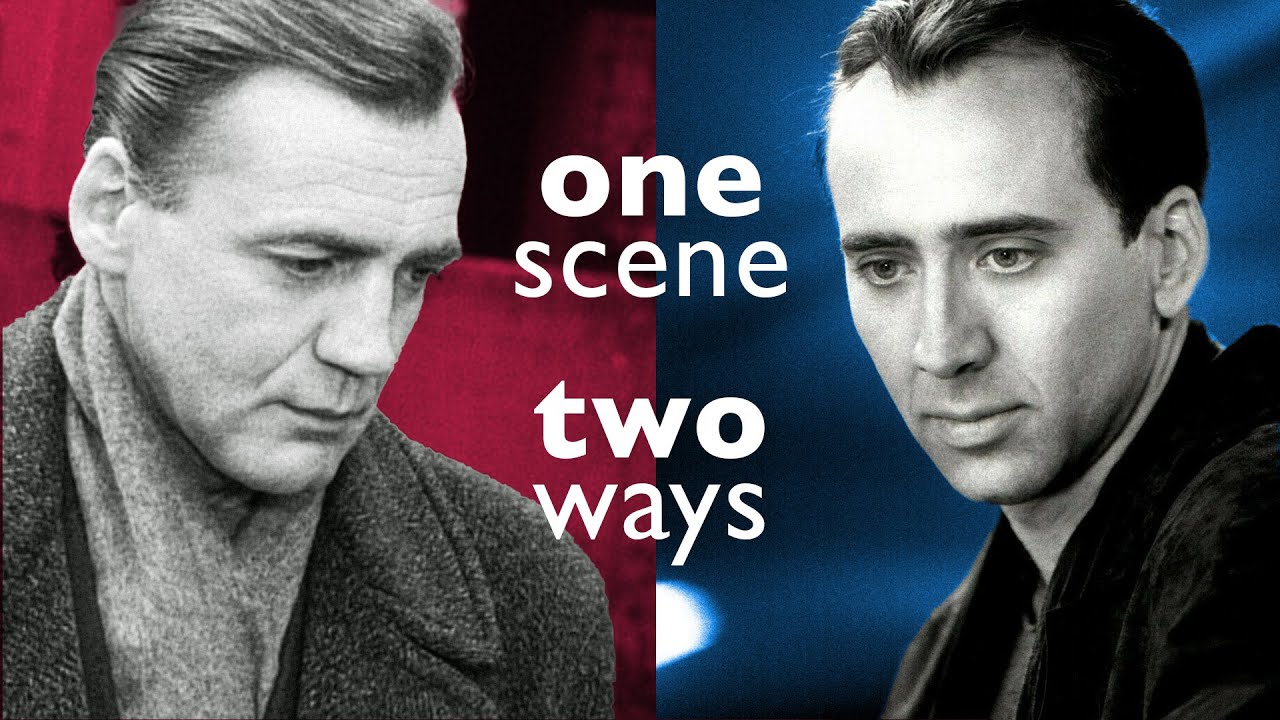
Recently, there has been an intriguing comparison between two films that share a common scene, yet differ vastly in cinematic culture. These films are the 1987 German movie "Wings of Desire" by Wim Wenders and the 1998 Hollywood remake "City of Angels." The contrast in these films goes beyond the decade separating their releases and highlights the differences in priorities between Hollywood and European art cinema.
"Wings of Desire" opens with a meditative and lyrical sequence, following the angel Damiel through a divided Berlin, absorbing the inner thoughts of its residents. This reflective opening is replaced by a highly emotional start in "City of Angels," wherein the angel Seth accompanies a young girl to the afterlife. This emotional intensity characterizes most of the Hollywood film, which focuses heavily on the love narrative.
The library scene is pivotal in both films, symbolizing a place where angels and contemplative humans coexist. In "Wings of Desire," this scene allows the narrative to breathe and explore thematic elements related to Germany's history and the human condition. In contrast, "City of Angels" uses the library as a mere backdrop to further its love story, demonstrating a more plot-driven approach.
Wim Wenders' choice of the Berlin State Library, with its significance tied to Germany's past and the Berlin Wall, underscores the integral role of setting in "Wings of Desire." Conversely, "City of Angels" opts for the visually appealing San Francisco Public Library, treating the setting secondary to the romance-oriented storyline.
This analysis reflects the differing priorities of European and American cinema, where one values a broader thematic scope and setting, and the other a focused emotional narrative.