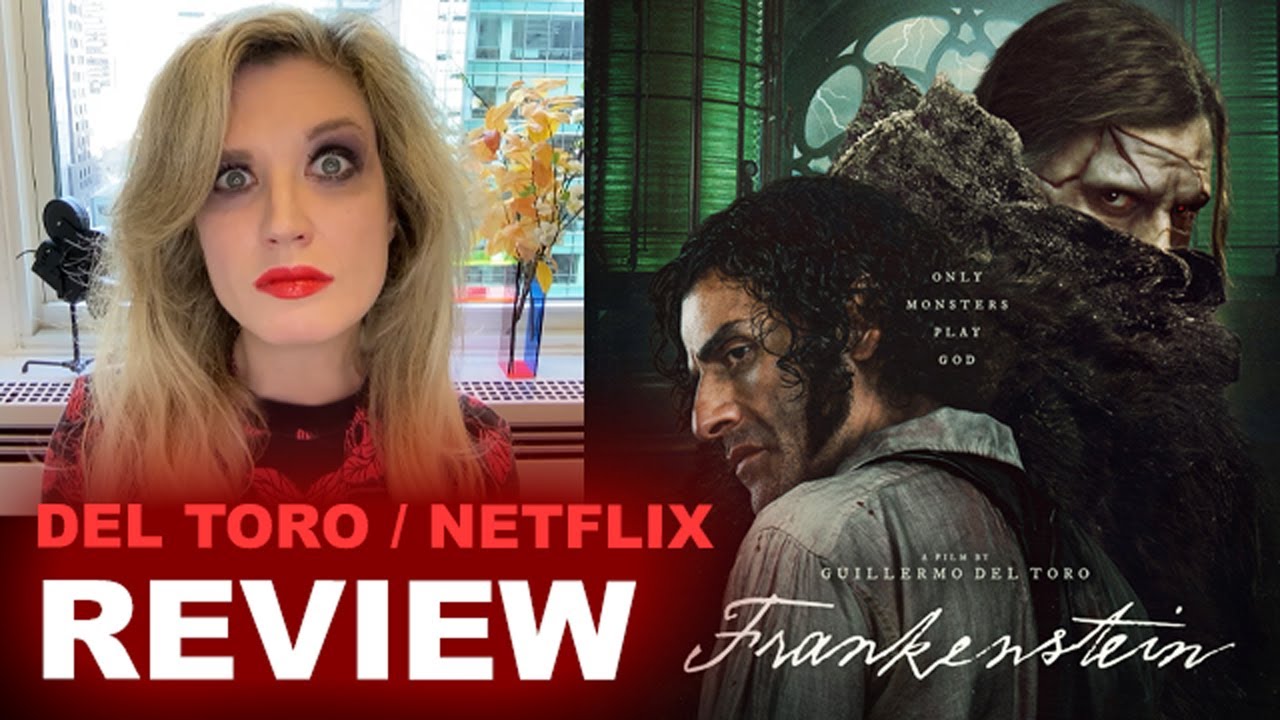
Guillermo Del Toro's latest film, "Frankenstein," presents a unique narrative divide. The movie's first half focuses on Victor Frankenstein's story, while the latter half centers on the monster's tale. This split structure leads to two distinctly different cinematic experiences.
The first half involves Victor's perspective, resembling a campy romance. Del Toro seems heavily influenced by "The Rocky Horror Picture Show," with Oscar Isaac donning tight red leather gloves as Victor Frankenstein. Despite efforts to evoke an Oscar-worthy story, this segment struggles with shallowness, lacking depth in narrative and visuals.
In contrast, the film's second half shines by following the poignant journey of the monster, portrayed by Jacob Elordi. This part resonates with Del Toro's storytelling strengths, exploring themes of identity, creation, and the connection between fathers and sons.
Elordi's performance stands out, offering a fresh take on the character amidst a narrative that adds a modern touch, providing the monster with Wolverine-like healing abilities. The exploration of these themes culminates in a memorable closing 20 minutes that left audiences applauding.
However, the film as a whole falls short due to a disconnect between intellectual aspirations and emotional engagement. Strong design elements and potential-rich story threads lack cohesive development, revealing Del Toro's passion project needs more refining.
"Frankenstein" is ultimately an uneven work, bursting with ideas but lacking in execution, suggesting it might have benefited more as a series than a standalone film. Its themes of familial relationships and personal identity are ripe for further exploration, particularly over a serialized format.
Despite these flaws, the film's latter halves present a hypnotic exploration of father-son dynamics, underscored by Elordi's standout performance. Together with Mia Goth, they bring a charismatic dimension to Del Toro's otherwise inconsistent execution.